English N You | English Courses for AP, GCSE & IB

Blog Details

  • Home
  • /
  • Blog Details
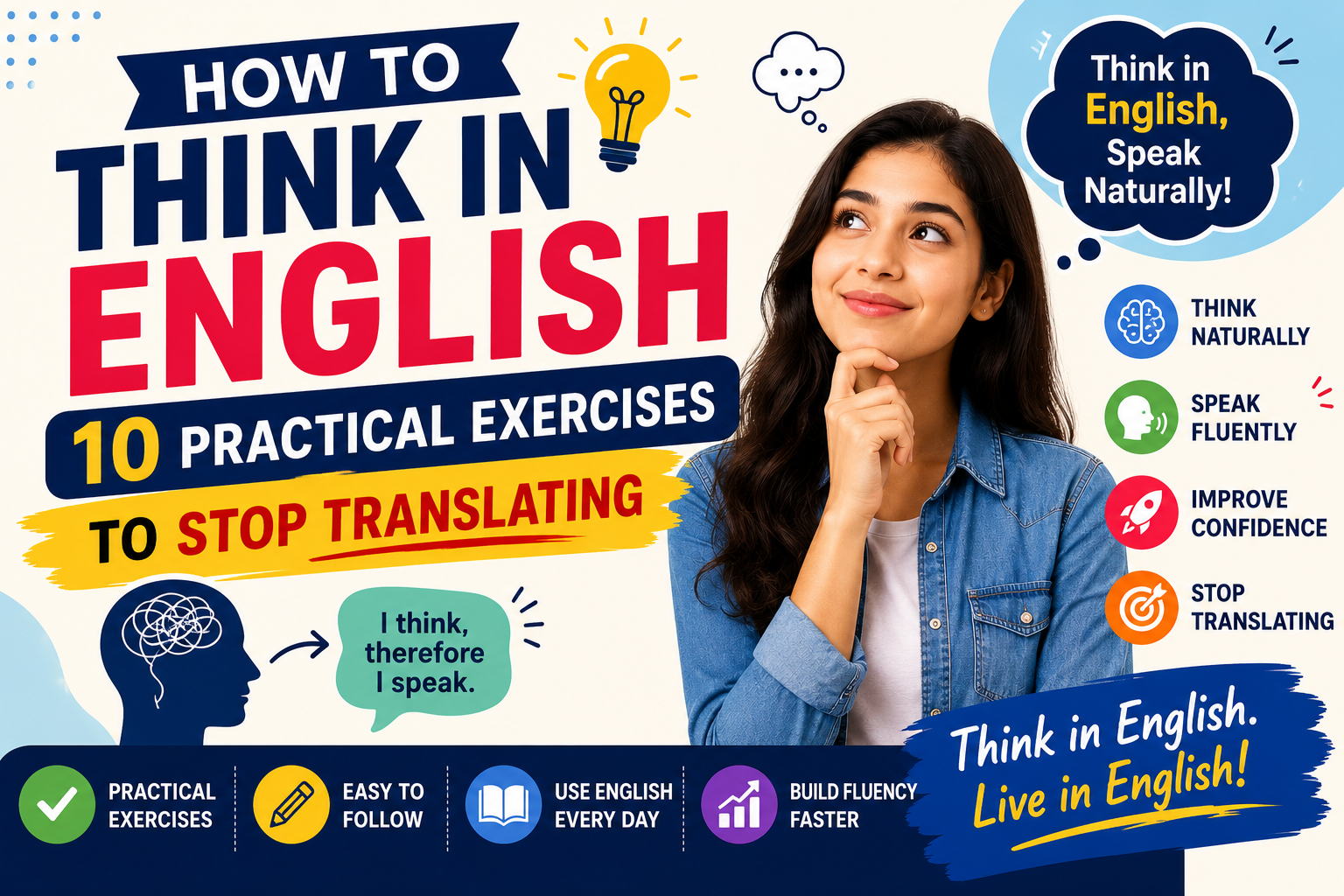
How to Think in English: 10 Practical Exercises to Stop Translating

How to Think in English: 10 Practical Exercises to Stop Translating

Do you translate every sentence from your native language before speaking English? Learn how to start thinking directly in English with 10 simple and practical exercises designed to improve your fluency, speaking speed, and confidence.

This guide will help you break the habit of translating word by word and develop a natural English-thinking process. Discover practical techniques such as English self-talk, describing your surroundings, visual thinking, and daily mental practice.


Train Your Brain to Think and Speak in English

Thinking in English is a powerful step toward speaking more naturally and confidently. Practise these exercises every day to reduce hesitation, form sentences faster, improve fluency, and communicate more comfortably in real-life conversations.

How to Think in English: 10 Practical Exercises to Stop Translating Train Your Brain to Think and Speak in English
Key Points
  • ✔ Build confidence and speak English more naturally
  • ✔ Understand why you translate from your native language
  • ✔ Learn how to start thinking in simple English
  • ✔ Practise 10 practical exercises to improve fluency
  • ✔ Use English self-talk to build speaking confidence
  • ✔ Describe your surroundings in English every day
  • ✔ Learn to form English sentences without translating
  • ✔ Improve your speaking speed and response time
  • ✔ Develop a natural English-thinking habit
  • ✔ Reduce hesitation during English conversations
shape-1 shape-2 shape-3
call-action-img
English communication for Business / Professional success

Affordable Your Online Courses & Learning Opportunities
Vocabulary & Grammar development

Mastering corporate communication requires shifting from basic language proficiency to strategic, high-stakes expression. This curriculum empowers ambitious professionals to master executive presence, cross-border negotiations, and persuasive storytelling. By deconstructing the nuances of workplace dynamics, learners transition from standard English to commanding tools for leadership, influence, and global impact.